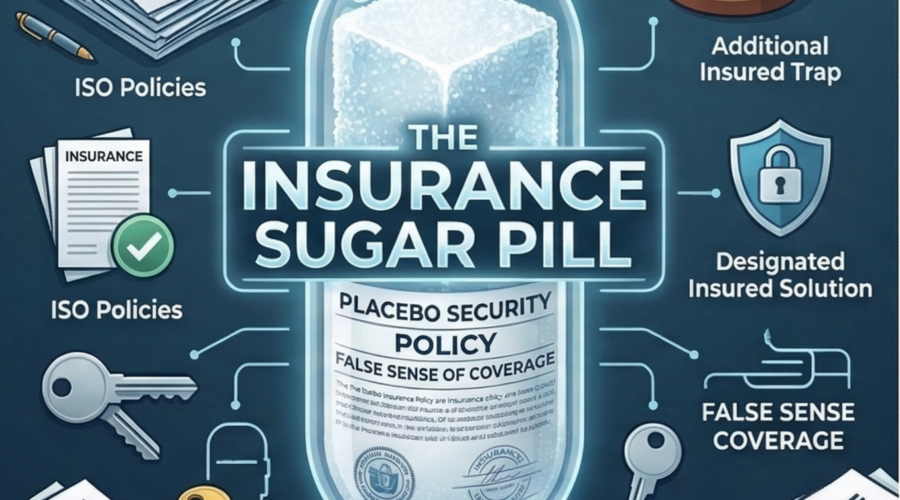
The Insurance Sugar Pill: What Brokers & Shippers Get Wrong About COIs
July 12, 2026
Quick Answer: What Does a COI Actually Protect?
A standard Certificate of Insurance (COI) is merely a snapshot of a carrier’s policy at a specific point in time. For freight brokers and shippers, accepting a stale or carrier-provided COI creates a massive liability blind spot. A COI does not guarantee active coverage, it does not prevent unauthorized policy cancellations mid-load, and it cannot protect your logistics network from negligent hiring lawsuits following the landmark Montgomery v. Caribe Supreme Court ruling. True protection requires direct-from-insurer data validation.
Why the Standard Certificate of Insurance is an Industry “Sugar Pill”
For decades, the logistics industry has treated the ACORD 25 Certificate of Insurance as a shield against liability. Shippers and freight brokers routinely accept PDF copies from motor carriers, file them away, and assume their cargo and corporate liability are protected.
In reality, traditional COIs act more like a psychological placebo, a “sugar pill,” rather than a legal defense.
1. The Fraud Loophole: Carrier-Edited Documents
When a motor carrier downloads a PDF of their certificate, it becomes vulnerable to manual alterations. In a highly competitive freight market, bad actors can easily modify expiration dates, coverage limits, or policy statuses using standard editing tools. If you accept a document directly from the insured party rather than the issuing agency system of record, you have no baseline verification.
2. The Mid-Load Cancellation Blind Spot
A certificate is only accurate the exact second it is generated. If a motor carrier defaults on their premium payment or cancels their auto liability policy five minutes after sending you the PDF, the physical paper remains unchanged. If an accident occurs while that carrier is hauling your high-value freight, your team is left exposed to a massive coverage gap.
3. The Shift in Legal Liability: Montgomery v. Caribe
The legal stakes for carrier vetting were permanently altered by the unanimous U.S. Supreme Court decision in Montgomery v. Caribe Transport. The ruling establishes that the Federal Aviation Administration Authorization Act (FAAAA) does not shield freight brokers or shippers from state-law negligent hiring claims.
If you route freight using an unverified, lapsed, or fraudulent policy, your operation can be held directly liable for catastrophic accident damages under state negligence laws. Relying on a stale sheet of paper is no longer a defensible vetting standard.
Moving From Document Storage to Real-Time Coverage Intelligence
To eliminate negligent selection liability, logistics operations must replace manual paperwork with automated verification systems.
Source-Direct Verification: Ensure all certificate data is pulled directly from the insurance agency’s system of record, completely bypassing carrier-edited attachments.
VIN-Level Audit Trails: Track insurance down to the specific vehicle identification number (VIN) to prove a truck was actively sponsored on a policy at the exact time of dispatch.
Continuous MVR Tracking: Leverage our native SambaSafety integration to monitor driver motor vehicle records continuously. Receive instant, automated alerts the moment a driver’s license status or safety score changes, protecting your operation from uncertified driver liabilities.